If you’ve ever pulled on a piece of woven fabric in your hands—say, a cotton work shirt, a heavy canvas tote, or the uniform for a construction job—you’ve probably noticed it doesn’t tear like a piece of paper. That difference comes down to tear strength, one of the most important, yet often misunderstood, properties of woven fabric. As someone who’s spent 12 years as a woven fabric supplier, I’ve tested hundreds of fabric rolls, helped clients troubleshoot tears mid-production, and learned that tear strength isn’t just a number on a spec sheet—it’s what makes a fabric work for what you need it to do. Let’s break down what tear strength actually means for woven fabric, what factors shape it, and how it matters whether you’re making upholstery, workwear, or outdoor gear. Woven Fabric

First, let’s get the basics right: tear strength is a fabric’s resistance to continuing a tear once it’s started, not its resistance to being punctured or ripped apart entirely. You create a starting tear, pull at it, and measure how much force is needed to make that tear grow. For woven fabrics, this is fundamentally different from knits or nonwovens because of the way the threads are arranged. Woven fabric is made by interlacing warp threads (the lengthwise threads that run along the entire roll) and weft threads (the crosswise threads that go from side to side). The crimp, or the bend in each thread where it crosses over or under another, is the secret here. If threads have low crimp—taut, straight, interlaced tightly—they transfer force better across the fabric when a tear starts, so the tear is harder to grow. If crimp is high, the threads bend more easily, absorb force by shifting instead of sharing it, so tears progress faster.
Not all tear strength is measured the same, either. There are two standard test methods almost every woven fabric supplier uses, and I can tell you from experience that mixing these up is a quick way to get a fabric that fails when you need it most. The first is the Elmendorf tear test, the most common one for apparel, linens, and lightweight to medium-weight fabrics. It uses a pendulum to measure the force needed to tear a fabric sample that’s been cut with a 20mm slit, and it reports results in grams-force (gf) or Newtons (N). The second is the trapezoidal tear test, used more for heavy fabrics like canvas, upholstery, or workwear, because it uses a shaped sample that simulates the way a tear might start and spread in a real-use scenario (say, a snag on a door hinge catching work pants). Results from trapezoidal tests are often higher than Elmendorf, and that’s not a flaw in the test—it’s because the trapezoidal sample distributes force more evenly across a longer segment of threads, which matches how most tears happen in the real world. I once had a client order a 100% cotton work shirt fabric using only Elmendorf results, and when they tested it in their own lab, the tear strength was too low for their safety standards. It turned out the 4 oz cotton poplin they’d picked had great Elmendorf tear strength for apparel, but its trapezoidal strength was too weak for industrial work. Since then, I always ask clients to share how they’ll use the fabric before recommending a test method.
Now, the biggest question: what makes a woven fabric’s tear strength go up or down? Let’s start with the raw material, because that’s the foundation. Natural fibers like cotton and wool have inherently lower tear strength than most synthetic fibers, but not all synthetics are equal. Polyester, for example, has a high tenacity (strength per unit of thickness) and a long molecular chain that absorbs force well, so woven polyester can have tear strength 2 to 3 times higher than a similar-weight cotton fabric. Nylon is even stronger for its weight, which is why it’s used for heavy-duty outdoor gear like tent panels and backpack straps. But I’ve seen great cotton fabrics work too—if we twist cotton yarn tighter, use a higher thread count, or add a small percentage of polyester to a cotton blend, we can boost tear strength enough for use cases like denim workwear. I recently supplied a 10 oz cotton-poly blend denim to a landscaping company; by adding just 8% high-tenacity polyester, we kept the soft feel of cotton while doubling its tear strength compared to 100% cotton denim, and the client saved 15% on fabric cost compared to a full polyester blend.
Thread size and thread count are next, and these are two factors that clients often misjudge. A thicker thread (higher denier, for synthetics; higher count for cotton) has more material, so it’s stronger, right? That’s partially true, but only if the threads are interlaced correctly. For example, a 20 denier nylon thread is thinner than a 40 denier thread, so a woven fabric made with 20 denier nylon will have lower tear strength than the same weave structure with 40 denier nylon—all else equal. But thread count is trickier: if you cram too many threads into a small space, you create more friction between threads, which actually weakens the fabric. When threads rub against each other constantly during use, they fray and break, leading to a tear that starts at the frayed point. I learned this the hard way early in my career; I fulfilled an order for a linen upholstery fabric for a high-end hotel, doubling the thread count to make it look tighter. Within six months, the hotel had hundreds of service calls from guests tearing the fabric on chair arms. The high thread count made the linen threads rub together as guests shifted, creating tiny frays that turned into tears. We had to replace half the upholstery at our cost, and since then, I always advise that thread count should be balanced with thread size and crimp to avoid friction damage.
Weave structure is another huge factor that most new clients don’t consider. Plain weave, the simple over-one-under-one interlace, is the most common because it’s cheap to produce and durable, but it doesn’t have the same tear strength as other weaves. Twill weave (used for denim, chinos, and upholstery) has a slight diagonal pattern, which means threads interlace less often, so they have more room to stretch and share force when a tear starts. That’s why twill workwear holds up better to snags than plain weave fabrics of the same weight. Satin weave, which has only 1/3 interlacing (for example), has the lowest tear strength of the three because threads are barely locked in place—they slide easily, and a small tear can spread very quickly. I always steer clients away from satin weave for high-wear items like tablecloths or work uniforms, even if it looks nicer, because it’s not built to resist tearing. One restaurant client originally ordered satin tablecloths for their 20 locations, and within three weeks, every location had to replace at least a dozen tablecloths. We switched them to a medium-weight twill polyester, and the only tears they’ve had in three years are from accidental sharp cuts, not normal use.
Finishing processes also impact tear strength, sometimes in surprising ways. A lot of fabric suppliers apply a durable water repellent (DWR) finish to outdoor fabrics, but cheap DWRs can coat the surface of the threads, making them slippery so they don’t interlock as well, which lowers tear strength. Heat setting, a process that stabilizes the weave structure to prevent shrinkage, actually improves tear strength if done correctly: it sets the crimp of the threads so they don’t shift out of place during use, which means force is distributed evenly across more threads when a tear starts. However, over-bleaching or over-washing a fabric, common in finishing cotton fabrics for apparel, can weaken the fiber’s molecular structure, reducing tear strength by up to 20% if the chemicals are too harsh. I work closely with my dyeing and finishing partners to test every batch for tear strength after processing, to make sure we don’t take a fabric that was strong on the loom and weaken it with poor finishing.
Let’s talk about real-world use cases, because that’s where tear strength matters most. If you’re making a tote bag that only carries light groceries, a fabric with 1000 gf Elmendorf tear strength is more than enough. If you’re making a heavy-duty construction bag that holds 50 lbs of concrete blocks, you need a fabric with at least 3000 gf Elmendorf strength, or 150 N on the trapezoidal test. For outdoor tents, the tear strength requirement depends on the size of the tent and the climate—alpine tents, which have to withstand high winds and sharp branches, need trapezoidal tear strength of 250 N or higher, while casual camping tents can get by with 150 N. Even for everyday apparel, tear strength matters: work shirts and pants need higher tear strength than dress shirts, because they get snagged on nails, fence posts, and equipment.
A common question I get is how to improve tear strength in a fabric without increasing cost. The answer is usually in the weave structure and fiber blend, not just thicker threads. For example, adding a small percentage of high-tenacity polyester to a cotton blend increases tear strength without the cost of switching to 100% polyester. Adjusting the weave from plain weave to a balanced twill weave improves tear strength by 15-20% without changing thread size or count. Even adjusting the finishing process—using a milder bleach for cotton fabrics, or a DWR that penetrates the threads instead of coating them—can boost tear strength without raising material costs. I always work with clients to prioritize what matters most to their product: if cost is the top concern, we can adjust blend and weave; if tear strength is non-negotiable (like for life safety equipment), we use the highest tenacity fibers and optimized weave.
At the end of the day, tear strength isn’t a one-size-fits-all metric. It depends on how you measure it, what the fabric is made of, how it’s woven and finished, and most importantly, how you’re going to use it. As a woven fabric supplier, my job isn’t just to sell a roll of fabric—it’s to recommend the right fabric that will hold up to the demands of the client’s product, whether that’s a hospital gown that needs to resist tearing during laundry, a work tent that has to stand up to desert winds, or a backpack for hikers that gets snagged on rock faces.
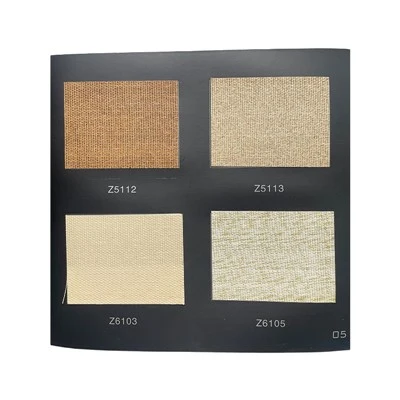
If you’re looking for woven fabric and want to make sure it has the tear strength to meet your needs, feel free to reach out to discuss your specific application. We can run sample tests, share our tear strength data for different fabric types, and tailor a solution that fits your budget and performance requirements.
Textilene Fabrics References
ASTM D1424, Standard Test Method for Tearing Strength of Fabrics by the Trapezoid Procedure
ASTM D1433, Standard Test Method for Tearing Strength of Fabrics by the Pendulum (Elmendorf) Method
Technical Association of the Pulp and Paper Industry (TAPPI). (2021). Testing Methods for Textile Materials: Tear Strength.
Textile Institute. (2019). Woven Fabric Properties and Performance. Woodhead Publishing.
Nanping Kingway New Material Co., Ltd.
Address: No. 10, Chengnan Branch Road, Chengjiao Town, Nanping, Fujian, China.
E-mail: npjwxcl@aliyun.com
WebSite: https://www.suernew.com/
