Let me tell you a story I’ve lived dozens of times with shop owners who call me panicking: their coating line, the workhorse that’s kept their parts finishing for 12 years straight, just sputtered out mid-shift. I’m a coating production line supplier, not a guy who sells shiny machines that fade fast. I’ve stood on more than 200 factory floors across three continents, watching lines go from first startup to retirement, and I can tell you the lifespan of a coating production line isn’t a number— it’s a conversation between how you built it, how you run it, and how you care for it. First, let’s bust the myth most new buyers bring to the table: there’s no one-size-fits-all 10, 15, or 20 year mark. I’ve installed lines that croaked at 7 years because a client tried to run 2x their rated capacity through a cheap oven that couldn’t handle the heat swing, and I’ve maintained lines that still hit precision specs at 28 years old, built with industrial-grade stainless steel and a client who changed their filters on schedule, not when they remembered. Let’s break this down real, not from a sales sheet—start with the core components that make up a coating line, because each part has its own heartbeat, and neglect one, and the whole line dies early. First, the pretreatment system: that’s the part that cleans and etches parts before coating, usually a series of tanks, spray nozzles, and chemical pumps. People forget this is where most hidden damage happens. If you use harsh phosphate cleaners that corrode mild steel tanks instead of 316L stainless, those tanks will leak in 8-10 years, not 15. Nozzle clogging from poor water treatment doesn’t just make your finish bad—it forces pumps to work 20% harder every cycle, wearing them out 5 years early. I worked with a farm equipment manufacturer last year who switched from well water (untreated, full of minerals) to reverse osmosis for their pretreatment, and their pump lifespan jumped from 4 years to 11. That’s a no-brainer that most first-time buyers miss. Next up: the conveyor system, the spine of the line. This is what moves parts from tank to oven to booth, and it’s responsible for 30% of all unplanned downtime in coating operations. The mistake here is always going for “lightweight” chain to save a few bucks. A properly specified overhead monorail conveyor, sized for your heaviest part and rated for continuous use, will last 18-25 years if lubricated and aligned monthly. The cheap chain that some suppliers push? It’ll stretch in 6 years, parts will swing into spray booth walls, you’ll get finish defects, and you’ll be replacing the whole conveyor at 8. I’ve seen clients argue with me about this—until their line shut down for 3 days last quarter and lost $120k in production. Ovens and curing booths are the heart of the finishing process, and this is where lifespan gets really messy. For liquid coating ovens, the sweet spot is 15-20 years if it’s a convection oven with proper insulation, not just sheet metal with a heater. Powder coating ovens? They run a bit hotter, so their lifespan is 12-18 years, mostly because of repeated thermal expansion and contraction warping the interior. But here’s the trick: if you calibrate your temperature controls every 6 months, seal the gaps around oven doors to keep heat in, and replace worn heating elements before they burn out, you can add 5 years to either. I had a client in automotive parts who ran their powder oven for 22 years by just doing quarterly thermography scans—they caught a hot spot in the ductwork that would’ve burned through the insulation if they’d waited another year. Spray booths, the other big part: they’re exposed to overspray and chemical fumes, so their filters and ventilation systems are consumable, but the structure can last 20+ years. The only thing that kills a booth early is people cutting filter change intervals to save $500 a month—clogged filters make the fan work too hard, and you’ll replace a $15k fan motor 10 years early instead of 18. Now, let’s talk about the factors that make a line’s lifespan swing wildly, because this is where most buyers go wrong when spec’ing their line. First, load and duty cycle. A line running two shifts a day, 5 days a week, at 80% of its rated capacity? That’s going to last 15-20 years. A line running three shifts, 6 days a week, pushing 120% of its rated load? You’re looking at 8-12 years, max. I had a client in aerospace who needed a line that could handle peak season and then sit idle for 2 months—we built it with oversized components for the peak load, and they’ve run it for 24 years, only replacing the pretreatment tanks once. The opposite was a construction parts shop that crammed as many parts as possible through their line to keep up with rush orders, and they replaced the entire line at 11 years, just to keep up with quality. Second, maintenance culture. This is the single biggest predictor of lifespan, bigger than the brand of the oven or conveyor. I’ve seen a line with name-brand components last 10 years because the shop foreman was too busy to do weekly inspections, and a line from a mid-tier supplier last 27 years because the maintenance team did a 30-minute check every Monday morning: tighten conveyor chains, test oven thermostats, flush a tiny bit of pretreatment tank water to check for contamination. Maintenance doesn’t have to be expensive—it’s consistent, small actions that add up. Let’s be clear: there’s a difference between “lifespan” and “useful lifespan.” A line might physically last 30 years, but if it can’t meet new EPA emissions standards or can’t handle modern powder coating materials, it’s obsolete after 15 years. That’s a huge point new buyers don’t plan for. If you spec a line today that can’t adjust its temperature for new low-VOC coatings, or doesn’t have a closed-loop paint recovery system, you might have to replace it before it wears out. That’s why I always talk to clients about future needs—are you planning to switch from liquid to powder in 5 years? Do you need to meet upcoming emissions rules? Building flexibility into the line isn’t a cost, it’s an investment in making your line last longer, not just physically, but functionally. Let’s get real about what a well-built, well-run line looks like. Over my career, I’ve had lines where the original parts are still in place, just replaced the consumables: filters, gaskets, pumps. The key is choosing a supplier that doesn’t cut corners on core components, not just the flashy stuff. I see suppliers all the time that offer a “discount” line with mild steel tanks instead of stainless, plastic conveyor sprockets instead of metal, thin insulation on ovens. Those are the lines that die young. I build lines with 316L stainless pretreatment tanks for corrosive materials, conveyors sized for 120% of rated load so there’s headroom, ovens with 4-inch insulation to cut down on wear and energy use. That costs a bit more upfront, but it means your line will last twice as long. I also work with clients on a support plan, not just a handoff when the line ships. When I install a line, I don’t just show them how to turn it on— I train their maintenance team to spot small issues before they become big ones. We do quarterly check-ins, help them adjust their maintenance schedule as their production changes, and source genuine replacement parts, not cheap knockoffs that break in a year. The story that sticks with me is a small job shop in Ohio that called me last year. They’d had a line that their previous supplier built for them, and it was 9 years old, already having major issues. We came in, did a full audit, and found that the pretreatment tank was mild steel, corroding from the chemicals, the conveyor was undersized, and the oven insulation was half gone. We worked with them to upgrade those core parts, retrain their team, and now that line is hitting specs like it’s 3 years old, and we project it’ll last another 12 years. They saved more than half the cost of a new line by investing in the right upgrades and maintenance, instead of replacing the whole thing. So, to wrap this up, the lifespan of a coating production line isn’t a number you can pick off a spec sheet. It’s 12-15 years for a line that’s underrated, poorly maintained, built with cheap components. It’s 18-25 years for a line that’s correctly sized, built for your specific materials, with a solid maintenance routine. And it can stretch to 30 years if you plan for future needs, invest in quality components, and treat your line like the critical asset it is, not just a machine. If you’re in the market for a new line, or wondering if your current one can keep running another shift, let’s talk. I don’t do hard sells— I’ve worked in this industry long enough that my best advertising is a line that’s still making parts 20 years after I installed it. Whether you need a line for small automotive parts, heavy industrial equipment, or aerospace components, I can help you spec something that fits your needs and will last for decades. Reach out when you’re ready to stop guessing about your line’s lifespan and start building one that works for your business for years to come. Coating Production Line
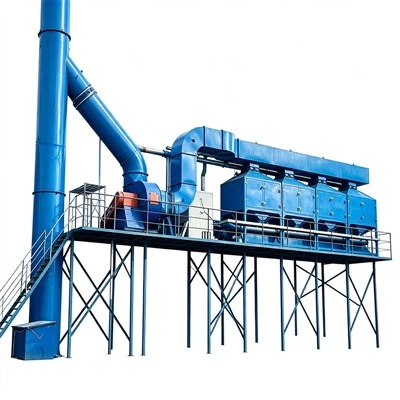
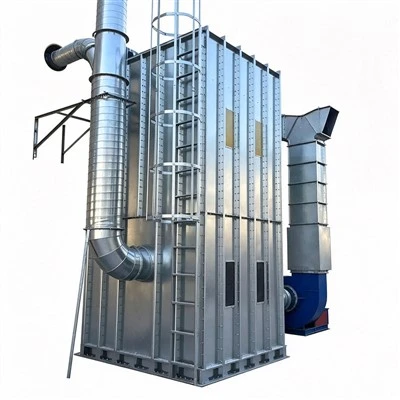
Waste Gas Treatment Equipment References:
- Surface Finishing Society of America. (2021). Coating Line Lifespan and Maintenance Best Practices. SFA Technical Bulletin Series.
- International Electrocoating Association. (2022). Durability Metals for Industrial Coating Pretreatment Tanks. IEA Industry Report.
- Occupational Safety and Health Administration. (2020). Operational Efficiency and Equipment Longevity for Industrial Finishing Lines. OSHA Small Business Guide.
Ningbo Jialong Energy-saving and Environmental Protection Technology Co., Ltd.
As one of the most professional coating production line manufacturers and suppliers in China, we also support customized service. We warmly welcome to buy advanced coating production line in stock here from our factory. If you have any enquiry about quotation, please feel free to email us.
Address: Dong Village, Dongwu Town, Yinzhou District, Ningbo City, Zhejiang Province (No.63 Zhennan Road, Dongwu Town)
E-mail: Lin.cx@nb-jalo.com
WebSite: https://www.cnjialong.com/
