In the dynamic world of food production, a well – structured food processing line is the backbone of any successful food manufacturing operation. As a seasoned supplier of food processing lines, I’ve had the privilege of witnessing the transformative power of these setups in countless food businesses. Today, I’ll be delving into the main components that make up a food processing line, highlighting their functions and importance. Food Processing Line
Preparation Area
The journey of food through a processing line begins in the preparation area. This is where raw materials are received, inspected, and pre – treated before moving on to further processing steps.
-
Receiving and Inspecting Equipment
In this stage, we use specialized equipment to receive raw materials such as conveyors and weighing scales. Conveyors are crucial for transporting raw ingredients from delivery trucks to the processing facility. They come in various types, including belt conveyors, roller conveyors, and screw conveyors. Each type has its own advantages; for example, belt conveyors are ideal for handling a wide variety of products, while screw conveyors are great for moving granular materials.
Weighing scales ensure that the correct quantity of raw materials is being used. This is essential for maintaining product consistency and quality control. Additionally, inspection systems are used to detect any foreign objects, damaged products, or contaminants in the raw materials. Metal detectors can identify metal fragments, while x – ray inspection systems can spot denser foreign bodies like glass or stones. -
Cleaning and Sorting Equipment
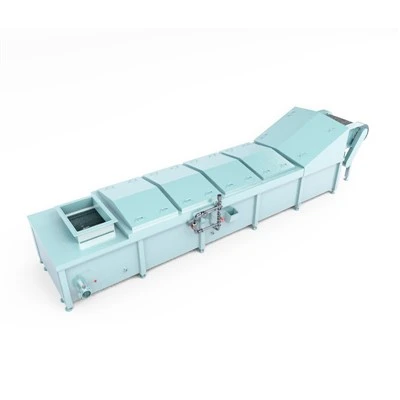
Once the raw materials are received, they need to be cleaned and sorted. For fresh produce, washing machines are used to remove dirt, pesticides, and other surface contaminants. There are different types of washing systems, such as immersion washers, spray washers, and combination washers.
Sorting equipment helps to separate good – quality products from defective ones. Optical sorters use cameras and sensors to identify differences in color, size, and shape. They can quickly and accurately remove any sub – standard items, ensuring that only high – quality raw materials progress through the processing line.
Processing Area
The processing area is where the raw materials are transformed into finished or semi – finished food products through various physical and chemical processes.
-
Cutting and Slicing Equipment
For many food items, cutting and slicing are essential steps. In the meat and poultry industry, band saws and circular saws are commonly used to cut large pieces of meat into smaller, more manageable cuts. In the fruit and vegetable processing sector, slicers and dicers can create slices, cubes, or strips of produce with precision. These machines can be adjusted to achieve different thicknesses and sizes, catering to various product requirements. -
Mixing and Blending Equipment
Mixing and blending are crucial for creating homogeneous products. In the bakery industry, dough mixers combine flour, water, yeast, and other ingredients to form dough. There are different types of dough mixers, such as planetary mixers and spiral mixers. Planetary mixers are versatile and can be used for a variety of tasks, while spiral mixers are more suitable for large – scale dough production due to their efficient kneading action.
In the beverage and dairy industries, blending tanks are used to mix different ingredients, such as milk, flavors, and sweeteners. These tanks are equipped with agitators to ensure thorough mixing of the components. -
Cooking and Baking Equipment
Cooking and baking processes are used to enhance the flavor, texture, and safety of food products. In the food industry, ovens, fryers, and steamers are commonly used. Convection ovens use hot air circulation to cook food evenly and quickly. They are widely used in the bakery and snack food industries.
Fryers are used to cook food in hot oil. They can be batch fryers or continuous fryers, depending on the production volume. Steamers are another popular cooking method, especially for vegetables and seafood, as they help to preserve the nutrients and natural flavors of the food. -
Preservation Equipment
To extend the shelf – life of food products, preservation techniques are employed. In the canning industry, canning machines are used to fill cans with food products, seal them, and then subject them to a heat treatment process. This process kills harmful microorganisms and creates a hermetically sealed environment, preventing spoilage.
In the freezing industry, blast freezers are used to rapidly freeze food products. Rapid freezing helps to preserve the texture, flavor, and nutritional value of the food by minimizing the formation of ice crystals.
Packaging Area
After the food products are processed, they need to be packaged to protect them from contamination, damage, and spoilage during storage and transportation.
-
Filling Equipment
Filling machines are used to accurately fill containers with the processed food products. For liquid products such as beverages and sauces, volumetric fillers are commonly used. These fillers measure and dispense a specific volume of the liquid into each container. For solid products like grains and snacks, gravity fillers or auger fillers may be used, depending on the flow characteristics of the product. -
Sealing Equipment
Once the containers are filled, they need to be sealed to ensure product integrity. For cans, seaming machines are used to create a tight seal between the can body and the lid. For flexible packaging such as bags and pouches, heat sealers are used. Heat sealing works by applying heat and pressure to the overlapping edges of the packaging material, melting the plastic and creating a seal. -
Labeling and Coding Equipment
Labeling and coding are essential for providing product information to consumers. Labeling machines apply labels to the packaged products, containing details such as product name, ingredients, nutritional information, and expiration date. Coding systems, such as inkjet printers or laser coders, are used to print batch numbers, production dates, and barcodes directly on the packaging.
Quality Control and Monitoring Systems
Throughout the entire food processing line, quality control and monitoring systems play a vital role in ensuring the safety and quality of the final products.
-
Sensors and Detectors
Sensors are used to monitor various parameters such as temperature, pressure, humidity, and pH levels during the processing and packaging stages. For example, temperature sensors in ovens and fryers ensure that the cooking or frying process is carried out at the correct temperature. Metal detectors and x – ray inspection systems, which were also mentioned in the preparation area, can be placed at different points along the line to detect any foreign objects that may have entered the product during processing. -
Automated Vision Systems
Automated vision systems are used to inspect the appearance of the food products. They can detect defects such as cracks, discoloration, or incorrect filling levels. These systems use cameras and image – processing software to analyze the products and remove any defective items from the production line. -
Data Logging and Analysis Systems
Data logging systems collect and store information about the processing parameters and product quality. This data can be analyzed to identify trends, detect potential problems, and optimize the production process. For example, by analyzing temperature data from a cooking process, adjustments can be made to ensure consistent product quality.
The Importance of Integrating these Components
The success of a food processing line depends on how well these components are integrated. Each component in the line must work in harmony with the others to ensure a smooth and efficient production process. For example, the speed of the conveyor in the preparation area should be synchronized with the processing and packaging equipment downstream to prevent bottlenecks. An automated control system can be used to monitor and adjust the operation of all the components, ensuring that they work together seamlessly.
Moreover, the design and choice of these components should be based on the specific requirements of the food product being processed. Different food products have different characteristics, such as viscosity, texture, and shelf – life requirements. Therefore, the equipment used in the processing line must be tailored to meet these specific needs.

As a food processing line supplier, I understand the importance of providing high – quality, efficient, and reliable equipment. Whether you are a small – scale artisanal food producer or a large – scale industrial manufacturer, we can help you design and implement a food processing line that meets your exact needs. Our team of experts can provide consultation, installation, and after – sales support to ensure that your production line operates at its best.
IQF Freezer If you are in the market for a new food processing line or looking to upgrade your existing one, I encourage you to reach out. Our experienced sales team is ready to discuss your requirements, answer your questions, and provide you with a tailored solution. Investing in the right food processing line can significantly enhance your productivity, improve product quality, and boost your bottom line.
References
- Fellows, P. J. (2000). Food Processing Technology: Principles and Practice. CRC Press.
- Heldman, D. R., & Lund, D. B. (Eds.). (2007). Handbook of Food Engineering. CRC Press.
- Singh, R. P., & Heldman, D. R. (2009). Introduction to Food Engineering. Academic Press.
Shaoxing Kanglong Rerrigeration and Fanner Equipment Co., Ltd.
As one of the most professional food processing line manufacturers and suppliers in China, we’re featured by quality products and good service. Please rest assured to wholesale advanced food processing line made in China here from our factory. Also, custom service is available.
Address: No.1,Lide Road,Shangpu Industry
E-mail: sales@iqffreezercn.com
WebSite: https://www.iqffreezercn.com/
