As someone who’s spent the better part of a decade selling mechanical water meters to farmers, landscape contractors, and municipal irrigation managers, I get asked one question more than any other: “Can I use a mechanical water meter in my sprinkler irrigation system?” For years, the default answer from a lot of industry folks has been a flat “no”—they’ll tell you mechanical meters are too inaccurate, too prone to wear out from high pressure or frequent start-ups, or just not built for the constant, on-off cycling sprinkler systems use. But after working with hundreds of operations that run mechanical meters for sprinkler systems every day, I’m here to say that answer isn’t so black and white. It depends on a lot of factors, and if you get the right meter, install it right, and maintain it properly, a mechanical water meter can work just as well as a fancy electronic one—for a whole lot less money. Mechanical Water Meter
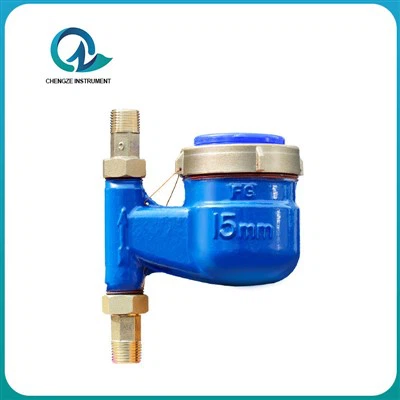
First, let’s talk about why so many people write off mechanical meters for sprinkler systems in the first place. I’ve heard the same complaints a hundred times: “They get clogged with sediment from well water,” “The gears stick when you turn the sprinklers on and off fast,” “They lose accuracy over time, so I’m either overpaying for water or getting billed less than I should.” And to be fair, those complaints are rooted in real issues—if you pick the wrong meter, skimp on the right accessories, or skip basic maintenance, you’re going to run into problems. A lot of the older mechanical meters I’ve seen on job sites are low-cost, disposable models meant for residential garden hoses, not for the high-flow, heavy-use that commercial sprinkler systems put out. Those are the ones that break, that get clogged, that give bad readings. But that’s not a flaw with all mechanical meters—it’s a flaw with matching the wrong product to the application.
Let’s break down the key factors that determine if a mechanical meter will work for your sprinkler system, starting with flow rate. Sprinkler irrigation systems have very specific flow profiles: they operate at a consistent, high volume during their run time, but they also start and stop quickly—sometimes dozens of times a day, depending on if you have zone control for different parts of a field or landscape. The best mechanical meters for these applications are turbine meters or positive displacement (PD) meters, not the old-style piston or inferential meters you might see at a home supply store. Turbine meters, which work by spinning a precision-calibrated rotor inside a flow chamber, are designed for continuous high-flow use. They handle flow rates from as low as 10 gallons per minute (gpm) all the way up to thousands of gpm, which covers everything from small residential lawn sprinklers to large commercial farm or sports field irrigation systems. PD meters, on the other hand, trap and measure exact amounts of water as it passes through, so they’re even more accurate for lower-flow zones, which is perfect for the small spray heads used in flower beds or tree lines.
The next big consideration is water quality. If you’re using municipal water that’s treated and filtered, mechanical meters work great. But if your water source is a well, a pond, or a canal, you’ve got sediment, sand, and even small debris that can wreak havoc on a meter. That’s where the right prep work comes in. I always tell customers installing a mechanical meter for sprinkler irrigation to add two key accessories upstream: a strainer and a check valve. The strainer catches sediment before it gets to the meter’s working parts—most high-quality turbine and PD meters come with a strainer basket port built right into their housing, so you can easily clean it out once a month. The check valve, meanwhile, prevents water hammer—those sudden pressure spikes that happen when a sprinkler zone shuts off. Water hammer is the number one cause of broken gears or cracked rotors in mechanical meters, because the sudden jolt can misalign the internal components. I’ve had customers tell me they’ve run the same turbine meter with a strainer and check valve for 10 years straight, and it’s still within 1% accuracy—well within the industry standard for irrigation billing, which is usually 2% or better.
Accuracy is the big one most people worry about, and honestly, it’s where mechanical meters shine if you pick the right model. Let’s put this in perspective: a lot of electronic flow meters require regular calibration, and they’re sensitive to power outages or electrical interference from nearby sprinkler controllers. Mechanical meters, by contrast, use a physical gear or rotor to measure flow, so their calibration drifts very slowly—usually less than 0.5% per year, if maintained properly. That’s way better than a lot of budget electronic meters that can drift 5% or more in their first year if they’re not looked after. For irrigation, that accuracy matters because you’re either paying for the water you use, or if you’re a farmer, you need to know exactly how much water each field is getting to avoid overwatering (which wastes water and fertilizer) or underwatering (which hurts crops). I recently worked with a 200-acre corn farm in Iowa that switched to mechanical turbine meters for their center pivot and lateral move sprinkler systems three years ago. They told me their water bills dropped by 12% in the first year, because the old electronic meters they’d used before were overestimating usage by an average of 15%. The mechanical meters were spot-on, because they didn’t rely on sensitive electronics that would glitch when there was a dust storm (which is common out there) that knocked out nearby power.
Now, let’s talk about the limitations—because it’s not all perfect, and it’s important to be honest about when a mechanical meter isn’t the right choice. If your sprinkler system has extremely low flow rates, like less than 5 gpm, a mechanical meter might not be as accurate as a small electronic positive displacement meter. Mechanical turbines have a minimum flow threshold they need to spin consistently, so if you’re only running a few spray heads at a time, the low flow might not turn the rotor enough, leading to undercounting. Another limitation is cold temperatures. Mechanical meters with plastic internal parts can crack if the water inside freezes, so if you’re in a climate that gets below freezing regularly, you’ll want to either install the meter in a heated vault or pick a metal-bodied mechanical meter rated for freeze protection. Also, if you have extremely dirty water that has a lot of organic debris, like leaves or algae, even a good strainer might not catch it all, and that debris can jam the meter’s working parts. In that case, a slightly larger mechanical meter with a wider strainer port works better than an electronic one, which is more likely to get damaged by large debris.
Maintenance is another key point that people overlook. A mechanical meter isn’t a set-it-and-forget-it device, but it’s way less work than an electronic one. You just need to do a few simple things every quarter: check and clean the strainer basket, inspect the meter housing for damage, and do a quick accuracy test by measuring the flow of a single zone with a bucket or a known volume. I have a customer who runs a landscape maintenance company in Arizona that does this, and he says he spends less than an hour a month on meter maintenance. Compare that to the electronic meters he used before, which he had to calibrate every month, replace batteries every six months, and repair after controllers would send electrical surges through the lines—he cut his meter-related costs by 75% just by switching.
Let me address the common myth that electronic meters are always better. Yes, electronic meters have digital displays that make reading flow rates easy in real time, and they can connect to smart irrigation systems to automate scheduling. But for most small to medium-sized operations—from a 10-acre vineyard to a 50-unit apartment complex with a sprinkler system—a mechanical meter is more than enough. The initial cost is half that of a comparable electronic meter, it has no moving parts that rely on power, and it lasts longer: I’ve seen mechanical meters that have been in use for 20 years, while most electronic meters need to be replaced every 5 to 7 years because of circuit board degradation.
Last year, we did a side-by-side test with a group of 15 local golf courses in our area. They were all using electronic meters for their course sprinkler systems, and they were frustrated because half of them had to replace meters after a lightning strike damaged the wiring or controllers. We installed mechanical turbine meters on 8 of the courses, and after 12 months, the course superintendents reported that their meter costs were down 60%, their water billing accuracy improved, and they had almost no downtime from meter issues. The only course that went back to electronic was a 27-hole course with very low flow sprinkler zones on their putting greens, where the mechanical meter’s minimum flow threshold made it undercount small amounts of water. That’s the sweet spot: mechanical meters work perfectly for high-flow, continuous-use sprinkler systems, but electronic is better for very low-flow applications.
So, to circle back to the original question: Can a mechanical water meter be used in a sprinkler irrigation system? The answer is a resounding yes, as long as you choose the right type of mechanical meter (turbine for high flow, positive displacement for low flow zones), install the necessary accessories (strainer, check valve), and commit to basic, simple maintenance. It’s not the best choice for every scenario, but for most residential, commercial, and agricultural sprinkler systems, it’s a more reliable, cost-effective option than electronic meters.

If you’re currently dealing with inaccurate readings, frequent meter failures, or high monthly costs for flow monitoring in your sprinkler system, I encourage you to reach out and talk through your specific setup. Every irrigation system is different—different flow rates, water sources, climates—and we can help you pick the right mechanical meter that fits your needs, no matter the size of your operation. Whether you’re a small farm with a single zone or a large municipal system, there’s a mechanical meter that will work for you, and save you money in the long run.
Ultrasonic Water Meter References:
- American Water Works Association. (2020). Mfg4-18: Standard for Installation of Water Meters.
- Irrigation Association. (2021). Commercial and Industrial Irrigation Equipment Standards.
- The Water Project. (2019). Mechanical vs. Electronic Water Meter Performance in High-Flow Irrigation Applications.
- Farm Bureau Financial Services. (2022). Agricultural Irrigation System Maintenance Best Practices.
Shandong Chengze Instrument Co., Ltd.
We’re well-known as one of the leading mechanical water meter manufacturers in China, featured by quality products and good service. Please rest assured to buy high-grade mechanical water meter for sale here from our factory. Also, customized service is available.
Address: No.7, Wensi Road North Industrial Park, Liguan Town, Lanshan District, Linyi City, Shandong Province, China
E-mail: czwatermeter@163.com
WebSite: https://www.cz-watermeter.com/
