If you’ve been in the steel manufacturing game for any length of time, you know that electric arc furnaces (EAFs) are workhorses—but even workhorses need tweaks to run faster, cheaper, and cleaner. Over the years, we’ve helped dozens of steel mills adjust their EAF operations, and one game-changer that keeps coming up? Continuous charging systems. A lot of folks hear “continuous charging” and think it’s just another fancy piece of equipment, but once you dig into the actual, on-the-floor benefits, it’s not just a upgrade—it’s a total shift in how you run your melt shop. Let’s break this down like we would with a mill foreman over a coffee, no stuffy jargon. Electric Arc Furnace
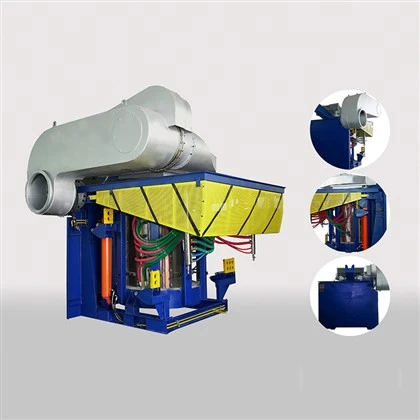
First, let’s cut through the basics: a traditional batch EAF charges all its scrap (or DRI—direct reduced iron) in big, one-time batches, right? You load it in, heat it up, melt it, tap it, then start all over. Continuous charging means you’re feeding material into the furnace a little at a time, nonstop, during the whole melt cycle. It sounds simple, but the ripple effects on your operation are huge.
Take energy efficiency, for example. Energy costs are the single biggest line item for most EAF steel mills—we’re talking 30-40% of total production costs here, depending on where you’re based. With batch charging, when you dump a big pile of cold scrap into the furnace, you’re blasting a ton of electricity just to heat that mass from room temp to melting point. That’s a huge spike in energy use, wasted on heating a cold block all at once. Continuous charging lets you add small, pre-heated (wait, yeah—modern continuous systems even have preheating zones!) increments of material, so the furnace isn’t starting from zero heat every time you add a load. Studies from industry groups show continuous charging can cut electricity use by 10-15% per heat. For a mill that does 100 heats a week, that adds up to tens of thousands of dollars in savings, no extra manpower needed. I remember a customer in Ohio who switched to our continuous system last year—they went from 380 kWh per ton of steel to 325, and their utility bill dropped by $120k in the first quarter. That’s not pocket change.
Next up: furnace lifespan. Every time you do a batch charge, you’re hitting the refractory lining (the heat-resistant bricks that line your EAF’s interior) with a massive, sudden temperature swing. Cold scrap dumped into a 1500°C furnace wall? That’s like pouring ice water on a hot pan—cracking, spalling, damage. Refractory replacements are super expensive: a full reline can cost $200k-$500k, plus 3-4 days of downtime where you’re not producing a single ton of steel. Continuous charging evens out those temperature fluctuations. The furnace wall stays at a consistent heat, no sudden shocks. Our data shows mills using our continuous systems have 20-25% longer refractory lifespans. One customer in Mexico went from relining every 18 months to every 22 months after the switch. Those extra months of production? That’s millions in revenue they didn’t lose to downtime.
Then there’s material flexibility. A lot of mills get stuck with scrap mixes that are hard to handle in batch systems. For example, light scrap (like auto body panels) can blow out of the furnace mid-charge if you add it all at once, or heavy scrap can sit at the bottom and take forever to melt. Continuous charging lets you layer materials—put light, pre-heated scrap on top, heavy scrap on the bottom, DRI in between—so everything melts evenly. We’ve had customers use everything from 100% recycled scrap to blends with 60% DRI without any issues, which is a big deal as more mills push to meet sustainability goals. Wait, speaking of sustainability—let’s not skip that part. Continuous charging also cuts emissions. Less electricity use means less grid emissions, and because materials melt more evenly, you’re burning less auxiliary fuel (like natural gas for heating) to finish the heat. Some of our customers have seen a 12% drop in CO2 emissions per ton of steel, which is a huge win if you’re aiming for green certifications or looking to meet regulatory limits.
Downtime is another big one. Batch EAFs have all kinds of stop-and-go: charging, melting, refining, tapping, waiting for the next batch. Continuous charging aligns the material feed with the melt cycle, so the furnace runs almost nonstop. That means you can turn out more heats in the same amount of time. A mill with a 90-minute batch heat cycle might drop to 75 minutes per heat with continuous charging—so 2 extra heats a day, 5 days a week, that’s 10 more heats a month, 120 a year. For a mill producing 200 tons per heat, that’s 24,000 extra tons of steel a year. That’s not just more product—that’s more revenue. We have a customer in South Carolina who upped their annual production by 18% without adding a single shift or a new furnace. It’s all about making the existing equipment work smarter, not harder.
Now, I know what some of you are thinking: “This sounds like a lot of work to install, or it’ll mess with my current setup.” Let’s address that. Our continuous charging systems are modular—we don’t make you tear out your whole EAF to install one. We work with your existing furnace dimensions, adjust the feed systems, integrate with your control software, so installation is downtime is minimal. Most customers are back up and running in 3-5 days, no major shutdowns. And we don’t leave you hanging: our team works with your operators for a week to get them up to speed, and we offer 24/7 support if something goes wonky.
At the end of the day, every steel mill’s biggest goal is to make high-quality steel as cheaply and efficiently as possible. Continuous charging systems aren’t just a tech trend—they’re a proven way to cut costs, extend equipment life, boost production, and lower your carbon footprint. If you’re tired of watching energy bills eat into your profits, or losing money to refractory replacements or unplanned downtime, it’s worth taking a closer look.

If you’re ready to stop guessing and start making real, measurable improvements to your EAF operation, we’re here to help. We’ve worked with mills of all sizes, from small 50-ton EAFs to large 200-ton ones, and we can tailor a system to fit your exact needs. Reach out to us to set up a chat, we’ll send over a quick assessment of your current setup and break down how much you could save.
Electric Arc Furnace References:
- Steel Manufacturers Association. (2022). Energy Efficiency Improvements in Electric Arc Furnaces. SMA Technical Bulletin.
- International Iron and Steel Institute. (2021). Continuous Charging and Refractory Lifespan Data. IISI Industry Report.
- Journal of Steel Technology. (2023). Operational Benefits of Continuous Charging Systems for EAFs. Volume 19, Issue 2.
- U.S. Department of Energy. (2022). Clean Steel Production: Continuous Charging Emission Reductions. DOE Industrial Program Report.
Xi’an Aobang Technology Co., Ltd.
As one of the most professional electric arc furnace manufacturers and suppliers in China, we’re featured by quality products and good price. Welcome to buy durable electric arc furnace for sale here and get quotation from our factory. Customized orders are welcome.
Address: No.268, Caotan 6th Road, Economical and Technological Development Zone, Xi’an, Shaanxi, China.
E-mail: alicezhang@xaabfurnace.com
WebSite: https://www.xaabfurnace.com/
