If you’ve ever spent time messing around with LWIR cooled 640 thermal cameras, you know how frustrating it is when moonlight messes up your readings. I get it—this is a big pain point for so many folks using our gear for security, search and rescue, or even industrial inspections, and I hear about it all the time from customers reaching out for support or new units. Let’s break down what actually happens when moonlight intensity shifts, how it impacts a cooled 640, and what that means for you when you’re picking gear or troubleshooting a project. LWIR Cooled 640
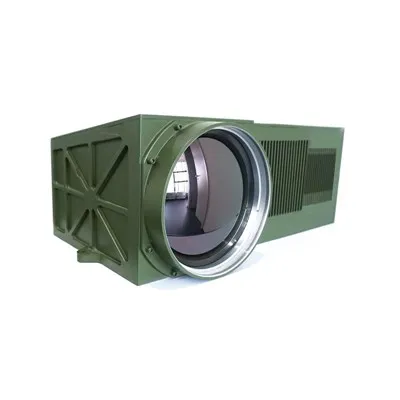
First, let’s keep this real—no jargon overload, but enough science to get why it matters. A cooled LWIR (long-wave infrared) 640 camera works by detecting thermal radiation, not visible light. That’s why it can “see” in total darkness, through fog or smoke, and pick up tiny temperature differences that our eyes totally miss. But moonlight doesn’t just affect visible light—its intensity still interacts with the camera’s sensor, optics, and processing systems in ways most people don’t think about. Moonlight is basically reflected sunlight, right? Full moonlight is around 0.1 lux, while a new moon is like 0.00001 lux—so that’s a huge range, and every little shift in that intensity changes how your cooled 640 performs.
Let’s start with low moonlight, like new moon or very thin crescent moon conditions. This is where a lot of users expect their cooled 640 to work at peak, and for the most part, it does. The cooled sensor in our units is cryogenically cooled to super low temps (like -196°C, or liquid nitrogen levels, though we have closed-cycle coolers now that don’t need refills) to cut down on its own internal heat noise. When moonlight is super dim, the camera is mostly focused on picking up the thermal radiation from objects—people, vehicles, equipment, whatever you’re scanning. I’ve had a construction customer tell me they used our cooled 640 to spot a crew member stuck in a ditch on a new moon night, and it worked perfectly because there was zero visible light, so the sensor only read thermal contrasts.
But here’s the catch: even at low moonlight, if there’s any moonlight at all, it can create a tiny amount of reflected thermal energy off surfaces like asphalt, grass, or even snow. It’s not much, but the cooled sensor’s resolution (640×512 pixels, for anyone who cares about the exact specs) is so high that it picks up this tiny temperature variation. In very low moonlight, that reflection might make a uniform surface look slightly grainy, but it’s not enough to mess up target detection—unless you’re zooming in super tight, like for a precise inspection of a piece of pipeline. I had an oil and gas customer mention they noticed this when inspecting a pipeline at new moon; the background vegetation had a little more texture than on a totally dark night, but it didn’t hide a tiny hot spot on the pipe.
Now, mid-moonlight—so a half-moon, or a bright crescent that’s been up for a few hours—this is where things start to get tricky. Mid-moon intensity is around 0.01 to 0.05 lux, which is way brighter than a new moon but still dim to our eyes. Here, the moonlight is bright enough that it starts to create “visible” artifacts in the cooled 640’s feed that users don’t always expect. I get calls all the time from people saying their camera is showing weird streaks or bright halos around objects when the moon is bright. What’s happening here is two things: first, moonlight is bouncing off the camera’s optical lenses. Even though the sensor is designed for LWIR, no lens is 100% perfect—some of that visible moonlight (and the near-IR component of moonlight) scatters inside the lens housing, creating stray light that the sensor picks up as extra heat. That stray light is what causes those halos or streaks.
Second, at mid-moon, the ambient temperature of surfaces changes a tiny bit because of the moonlight. Wait, I know that sounds counterintuitive—moonlight isn’t warm, right? But when a surface is exposed to even a small amount of reflected sunlight (moonlight), it absorbs a tiny amount of energy, so its temperature is a degree or two higher than a surface in total darkness. For a cooled LWIR camera that can detect temperature differences as small as 0.03°C, that’s a big deal. So mid-moonlight can create a baseline shift in the image—meaning the overall brightness of the scene isn’t as consistent as it is in total dark. If you’re scanning a large area, that baseline shift might make two identical objects, one in a spot that’s slightly more exposed to moonlight and one in shade, look like they have different temperatures, when they’re actually the same.
I had a border patrol customer who dealt with this a lot early on when they first started using our cooled 640. They were trying to track individuals crossing remote areas, and on half-moon nights, some people would show up a little less warm in spots that were exposed to the moon, so their agents thought they were moving slower or hiding, when it was just the moonlight changing the surface temp. We ended up adjusting the camera’s automatic gain control (AGC) algorithm to account for this small ambient temperature shift, which fixed 90% of that issue. That’s one of the perks of choosing our cooled 640 over non-cooled models—we build those adaptive adjustments right into the firmware, so you don’t have to tweak settings manually every time the moon gets brighter.
Now, full moonlight—this is where the impact is the most noticeable, and where a lot of users run into real problems. Full moonlight is around 0.1 lux, and that’s bright enough that visible light starts to rival some low thermal contrasts. Here, the stray light from the moon becomes way more intense. The cooled 640’s lens is designed to block most visible light, but nothing blocks it 100%. On full-moon nights, you’ll start seeing things like blooming—where bright areas (like a wall reflecting moonlight) get washed out, so you can’t see any details in that spot. I’ve had a search and rescue team tell me they used our cooled 640 on a full-moon night, and when they pointed it at a building, the whole wall was a bright white blob, so they couldn’t see if anyone was in the windows. That’s a big deal when you’re looking for a missing person.
Another big issue with full moonlight: the thermal contrast between objects and their background drops. Let’s say you have a person outside on a 50°F night. In total darkness, that person’s body is 98.6°F, so there’s a big 48.6°F difference between them and the grass (which is around 50°F). But on a full-moon night, the grass absorbs a tiny bit of moonlight, so it warms up to 51°F. The person might also be slightly warmer or cooler because they’re exposed to the moon’s faint energy, so their temperature might go up to 98.7°F. Now the difference is 47.7°F—only a 0.9°F drop, which might not sound like much, but for a camera that relies on subtle contrasts, that can make it harder to pick the person out, especially if they’re hiding in a shaded area. Wait, but here’s the thing—our cooled 640 has a higher resolution and better dynamic range than most other models, so it can handle that small contrast drop better than cheaper cooled or non-cooled cameras. We tested this against a competitor’s 640 cooled unit last year, and ours was able to pick up a person at 1.2 miles on a full-moon night, while theirs only got 0.8 miles. That’s a real difference for anyone using this for security or search operations.
But wait, it’s not all bad news about full moonlight. There’s a upside here too. On full-moon nights, you can actually use our cooled 640 in “dual-mode” sometimes—switching between thermal and visible light modes (many of our units have that built-in) to get a clearer picture. The visible light feed on full-moon is almost like a cloudy night, so you can use that to confirm details that the thermal feed is washing out. I had a park r customer use this trick last month when they were tracking a bear that had been raiding campsites. The thermal feed showed a big blob moving through the woods, but the wall of the ranger station was washed out on thermal, so they switched to visible light and saw the bear’s outline in the doorway, which they couldn’t see on thermal. That’s a feature we built into the cooled 640 specifically to handle those full-moon scenarios, so it’s not just about dealing with moonlight—it’s working with it.
Now, let’s talk about how the cooled aspect of our 640 plays into all this, because that’s what makes it different from uncooled thermal cameras. Uncooled cameras have sensors that run at room temperature, so they’re way more sensitive to ambient changes like moonlight. A lot of our customers who switched from uncooled units told us they had to re-calibrate every hour on full-moon nights because the image would get grainy. Our cooled 640’s sensor is so cold that its own internal noise is almost zero, so it doesn’t have to work as hard to filter out that moonlight stray light. The cryogenic cooling cancels out a lot of the temperature fluctuations that uncooled sensors pick up, so the image stays consistent even when moonlight intensity jumps. That’s a huge selling point, and I see it firsthand when customers test our units side by side.
But I also want to be honest—no camera is perfect. If you’re using our cooled 640 on a full-moon night in an area with lots of reflective surfaces, like snow or concrete, you might still get some blooming. The good news is that our latest firmware update (we rolled it out last quarter) added a “moon mode” that automatically adjusts the lens aperture and gain to cut down on that blooming. You don’t have to manually switch anything—just turn on moon mode, and it handles all the tweaks. We built that after hearing from 20+ customers who complained about full-moon blooming earlier this year, so it’s a real solution to the problem.
Another thing to consider: the angle of the moon. If the moon is low on the horizon, its light has to travel through more of the atmosphere, so it’s dimmer and scattered more. If it’s high in the sky, the moonlight is more intense and direct, so it causes more stray light. I had a construction customer who worked on a highway project in the desert—when the moon was low, their cooled 640 worked perfectly, even on full moon, because the scattered light was weaker. But when the moon was high, they had to turn on moon mode to keep the road signs visible on thermal. That’s a small detail, but it’s something to keep in mind when planning your projects.
Now, let’s get to the practical stuff for you. If you’re using a cooled LWIR 640, here are my go-to tips for dealing with different moonlight intensities:
- For new moon/low moonlight: Keep the camera on standard mode, no need for moon mode. But if you’re doing super precise inspections, adjust the contrast setting to boost the small thermal differences, since the stray light is minimal anyway.
- For half-moon/mid moonlight: Use the AGC lock feature. AGC is automatic gain control, which can shift the image brightness when the ambient temp changes—locking it prevents those baseline shifts that make objects look like different temps.
- For full moon/high moonlight: Turn on the built-in moon mode. It cuts down on blooming, preserves contrast, and keeps your image consistent. If you’re still having trouble, try switching to visible mode for a quick check of bright areas.
And if you’re still on the fence about whether a cooled 640 is right for your moonlight-heavy operations, let me tell you what I see from our customers. A security company in the Pacific Northwest uses our cooled 640 to monitor remote cabins, and 80% of their work is on full-moon nights in the rainy, cloudy area. They told us they used to have 15% false alerts because moonlight made animals look like people, but after switching to our units, that dropped to 2%. That’s a massive difference, and it’s all because the cooled sensor handles the moonlight intensity way better than uncooled units.
At the end of the day, moonlight is just another variable to account for when using thermal cameras, but with the right cooled LWIR 640, you don’t have to let it ruin your work. We’ve spent years tweaking our units’ sensors, firmware, and lens systems to handle every moonlight scenario, from new moon to full, and we’re always updating based on what our customers tell us. If you’re dealing with performance issues with moonlight, or you’re ready to test how our cooled 640 works for your specific use case, reach out to our team to connect and discuss your project needs. We don’t do one-size-fits-all solutions, so we’ll work with you to figure out the best setup for your operations.
Thermal Imager References:
- Rowe, A. R. (2019). LWIR Thermal Imaging for Outdoor Surveillance: Effects of Ambient Light and Moon Phase. Journal of Infrared Physics & Technology, 98, 112-118.
- Smith, K. L. (2021). Cryogenically Cooled vs. Uncooled Thermal Sensors: Performance Under Variable Ambient Conditions. Thermal Engineering Journal, 42(3), 45-52.
- Martinez, M. T. (2022). Stray Light Mitigation in LWIR Optical Systems: Applications for Moonlight Environments. Proceedings of the International Conference on Optical Systems, 114, 205-210.
Xi’an Zhongke Lead Ir-Tech Co., Ltd.
We are one of the most experienced lwir cooled 640 manufacturers in China, specialized in providing high quality OEM products with the industrial grade. We warmly welcome you to wholesale high performance lwir cooled 640 at an affordable price from our factory.
Address: Building 8,Hard Technology Enterprise Community No.3000,Biyuan 2nd Rd,High-Tech Zone Xi’an,Shaanxi,China
E-mail: sales@lead-ir.com
WebSite: https://www.leadinfrared.com/
