If you’ve ever spent time in a valve or process control room, chances are you’ve encountered rack and pinion actuators—those compact, robust devices that turn control signals into the twisting motion needed to open, close, or modulate valves. As someone who’s spent 12 years selling and supporting these actuators, I’ve lost count of how many times clients come to me confused about the difference between single-acting and double-acting models. It’s not just a technical nuance; picking the wrong one can lead to costly downtime, unnecessary maintenance, or even safety risks in critical applications. Today, I want to break this down in plain, practical terms—no overly jargon-heavy lectures, just the real-world insights I’ve picked up working with oil and gas, water treatment, pharmaceutical, and food and beverage clients across North America. Rack And Pinion Actuator
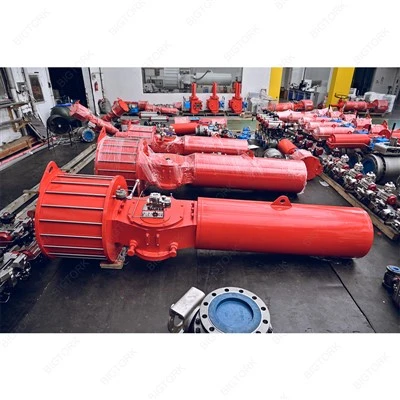
Let’s start with the basics, because you can’t tell single from double if you don’t understand how a rack and pinion actuator works at its core. At their simplest, these actuators consist of a central gear (the pinion) mounted to the valve stem, and a straight set of gear teeth (the rack) that slides back and forth inside the actuator housing. When the rack moves linearly, it spins the pinion, which in turn twists the valve stem. That linear-to-rotary motion conversion is the magic that makes rack and pinion actuators so reliable—they’re lighter, more compact, and easier to seal than scotch yoke actuators for most quarter-turn valve applications (think ball, butterfly, and plug valves that only need to rotate 90 degrees to fully open or close).
Now, here’s where the single vs double question gets critical. The biggest difference between the two models is how they generate the force needed to move the rack—and therefore the valve. Single-acting actuators, often called spring return actuators, use a stored energy component (a set of heavy-duty steel springs) to move the valve to a default position when power or air is lost. Double-acting actuators, by contrast, use pressurized fluid (almost always compressed air, sometimes hydraulic fluid) on both sides of the rack to move it back and forth; there are no springs, just continuous fluid pressure to drive motion.
Let me walk you through how that plays out in operation, because it’s not just a list of parts. Take a typical single-acting pneumatic actuator, the most common type of single-acting unit you’ll find in industrial settings. When you supply compressed air to the actuator, you direct it to one port, which pushes the rack forward. This compresses the set of springs that sit on the opposite side of the rack. When you vent the air or lose pressure for any reason (a failed air compressor, a broken line, a power outage that shuts down the air system), the compressed springs expand and push the rack back to its original position. That default position is fixed during installation—you can choose to have single-acting actuators default to open or closed, depending on your process needs. For example, a water treatment plant might use a single-acting actuator on a chemical feed valve that must close automatically if air fails, preventing toxic chemicals from leaking into the supply line.
Double-acting actuators work differently. Instead of relying on springs, you have two separate air chambers on either side of the rack. One port supplies compressed air to push the rack one way (say, opening the valve), while the other port vents air or supplies air at pressure to push the rack the opposite way (closing the valve). There’s no stored energy here—if you lose air pressure entirely, the rack stops moving wherever it is, and the valve stays in its current position until pressure is restored. That might sound like a drawback at first, but it’s actually a strength for applications where you need precise, controlled motion that doesn’t rely on springs.
Now, let’s get into the practical pros and cons of each, because that’s what most clients care about when they’re choosing between them. I’ll draw on recent projects I worked on to make this concrete. Last year, a mid-sized pharmaceutical plant contacted us because their existing single-acting actuator on a batch reactor valve kept failing. They were using it because they wanted a fail-safe position, but their process required modulating the valve 20 to 30 times a day to adjust flow during different stages of production. The springs in that single-acting unit were cycling constantly, and after 18 months, the spring tension had weakened, causing the valve to stick mid-position. We recommended switching to a double-acting actuator, which could handle the high number of cycles without spring degradation, and paired it with a solenoid valve that would vent and supply air on command to get the exact modulation they needed. That plant has run 12 months of flawless operation since, no spring-related issues.
That example highlights one of the key tradeoffs between the two actuator types: cycle life and maintenance. Single-acting actuators have built-in springs, which are a moving part that wears out over time. Even high-quality chrome-silicon springs, the industry standard, have a finite cycle life—usually between 50,000 and 1 million cycles, depending on the size and application. Every time you cycle the valve, you’re compressing and expanding those springs, leading to fatigue, corrosion, or breakage over time. Replaceable springs are available, but that’s an extra maintenance task, especially in hard-to-reach locations like high-up valve stacks on an oil rig. Double-acting actuators, by contrast, only have moving parts related to the air chambers and the rack and pinion itself. With proper lubrication and seal replacement every 3 to 5 years, these units can last 10 million cycles or more. That’s a huge benefit for high-cycle applications, like conveyor line valves in food processing plants that open and close every few seconds for hours at a time.
Cost is another big factor, but it’s not as straightforward as “single is cheaper or double is cheaper.” Smaller actuators (up to 100 Nm of torque) often have a small price difference, with single-acting models being slightly cheaper upfront because they don’t need two air ports and chamber seals. But as torque requirements go up—for large valves that need 1,000 Nm or more of force—the price gap widens significantly. The springs in large single-acting actuators are massive, and engineering them to deliver consistent torque over their cycle life adds material and manufacturing costs. I recently quoted a 2,000 Nm actuator for a water plant’s main feed valve: a double-acting unit cost $1,800, while the comparable single-acting spring return unit was $2,700. The single-acting unit also had a larger footprint, making it harder to fit into their existing valve skid, which added another $500 in installation labor.
Fail-safe functionality is where single-acting actuators shine, though. This is the number one reason clients choose them, and it’s non-negotiable in many industries. Oil and gas pipelines, for example, require valves to close automatically if pressure drops, preventing leaks and explosions. Power plants use them on cooling water valves that must open if power fails, so backup generators can keep operating. In these cases, relying on the valve’s current position when pressure fails is not an option—lives and assets are on the line. The only downside here is that if you have to change the fail-safe position later (say, you originally ordered a close-on-fail actuator and now need open-on-fail), you can’t just flip a switch. You have to disassemble the actuator, remove and rearrange the springs, and reassemble it—something that takes a technician 2 to 4 hours, versus double-acting actuators which can be reversed simply by flipping the air line connections in 10 minutes.
Operating speed is another practical difference I see play out on job sites. Because single-acting actuators use spring force to move the valve to its fail position, they often open or close faster than double-acting actuators in a fail scenario. That’s a big plus for applications where speed is critical, like fire suppression system valves that need to open in less than a second when a fire is detected. Double-acting actuators, by comparison, move only as fast as the air supply allows—you can adjust speed with flow control valves, but even then, they rarely match the spring-driven speed of single-acting units. That said, if you’re using them for continuous modulation, you actually have more control over speed with double-acting units, because you can adjust air pressure to fine-tune the torque and motion, rather than relying on spring tension which is fixed once the actuator is assembled.
Let’s also talk about size and installation, because that’s a common pain point for field teams. Single-acting actuators have the spring assembly stacked on one side or both sides of the rack, which makes them longer and wider than an equivalent torque double-acting actuator. A 500 Nm single-acting actuator, for example, is about 8 inches long, while the same torque double-acting model is 5 inches long. That might not sound like much, but when you’re working in a valve pit where every inch of space is at a premium, that extra length can mean the difference between fitting the unit and having to rework the entire pipe layout. Double-acting actuators also have simpler plumbing—you only need two air lines, versus single-acting units which sometimes have a vent line and a separate air line for the spring side, adding to the number of connections that can leak over time.
Now, let’s cover some common myths I hear from new clients. One is that single-acting actuators are always more reliable because of their fail-safe feature. That’s only true if you test the springs regularly. I worked with a chemical plant a few years ago that skipped their annual spring tension test, and a 10-year-old single-acting actuator failed to close during a pressure drop because the springs had corroded and lost 30% of their tension. Double-acting actuators, while they don’t have fail-safe springs, have far fewer wear points, so their overall reliability is often higher in non-critical applications where fail-safe isn’t required. Another myth is that double-acting actuators can’t be used for safety applications. That’s not true—you can add a backup air reservoir and a check valve to a double-acting actuator, so if pressure fails, the reservoir holds enough air to move the valve to a predetermined position. It’s a more complex setup than a simple spring return, but it works if you don’t want to deal with spring maintenance.
So, how do you choose which one is right for your application? Let’s break it down into clear, actionable questions. First, do you need the valve to return to a specific default position if power or air is lost? If your answer is yes, single-acting is the only option. That’s non-negotiable for safety-critical systems. Second, how often will you cycle the valve? If you’re cycling more than 10,000 times a year, double-acting is almost always the better choice, because spring wear will become a costly maintenance issue. Third, what’s your space and budget? If you have limited space and a lower torque requirement, double-acting’s smaller footprint and lower installation cost might tip the scale. If you’re on a tight budget for a small safety valve, a single-acting unit might be the way to go. Fourth, do you need precise modulation? Double-acting actuators offer far more control over flow, because you can adjust air pressure incrementally to fine-tune the valve’s position, making them ideal for process control applications where flow rates need to be adjusted dynamically.
Over the years, I’ve seen clients make both good and bad choices between these two actuators. One of my favorite success stories is a craft brewery that contacted us last year for a set of actuators for their fermentation tank valves. They needed precise control over how much beer flowed into each tank, and they didn’t need a fail-safe because the tank is part of a process that shuts down gracefully. We recommended double-acting actuators, and they’ve been able to adjust flow to within 0.5 gallons per minute, which has cut their batch rejection rate by 12%—something they couldn’t do with their old single-acting units that had inconsistent spring tension. On the flip side, I’ve seen a water treatment plant replace a double-acting actuator on their main inlet valve because they lost air pressure during a storm and the valve got stuck open, causing a temporary plant shutdown. That plant has since switched to single-acting actuators for all their critical inlet and outlet valves, even though upfront costs were higher, to avoid future downtime.

At the end of the day, there’s no universal “better” actuator—just better actuator for the job. Single-acting is the only choice when safety or automatic fail-positioning is required, and it’s a solid pick for low-cycle, high-torque applications where space isn’t an issue. Double-acting is the go-to for high-cycle process control, where precise motion and low maintenance are priorities, and where fail-safe isn’t a mandatory requirement. If you’re still not sure which one fits your needs, don’t guess—talk to someone who works with these actuators every day, not just a sales rep pushing a specific model.
Hydraulic Actuator We’ve been supplying rack and pinion actuators for over a decade, and we’ve helped thousands of clients match the right actuator to their application, no matter the industry. Whether you need a small single-acting actuator for a chemical feed line or a high-torque double-acting unit for a large ball valve, we can provide the right product for your needs, plus installation support and maintenance services to keep your system running smoothly. If you’re tired of dealing with actuators that don’t fit your process, or you’re planning an upgrade for your valve system, reach out to our team to discuss your project. We’ll walk through your requirements, offer practical recommendations, and make sure you get an actuator that works for you, not against you.
References
- Valve Actuators: A Guide to Types, Selection, and Application. ISA, 2021.
- Pneumatic Actuator Design and Maintenance Best Practices. Fluid Power Society, 2020.
- Quarter-Turn Valve Actuation: Single-Acting vs. Double-Acting Performance Metrics. Pumps & Systems Magazine, 2019.
- Spring Fatigue in Rack and Pinion Actuators: Failure Analysis and Prevention. Journal of Industrial Maintenance, 2022.
Zhejiang Bigtork Valve Automation Co., Ltd.
Zhejiang Bigtork Valve Automation Co., Ltd. is one of the leading rack and pinion actuator manufacturers and suppliers in China. We warmly welcome you to buy customized rack and pinion actuator at competitive price from our factory. Contact us for more details.
Address: 98 Yuanqu Avenue,Anfeng Industrial Zone,Oubei,Yongjia,Zhejiang,China.
E-mail: sales@bigtork.com
WebSite: https://www.bigtork.com/
